A cavity can behave itself for quite a while before you notice much of anything. Sometimes we find one during a routine exam while the tooth still feels completely normal, while other times a patient mentions that one spot has started reacting to cold, sweets, or pressure. Unfortunately, by the time a tooth is giving you a strong, unmistakable signal, the decay may already have had plenty of time to work its way deeper.
At Prairie Dental Group in Eden Prairie, we look at the full picture before recommending a filling. We consider how deep the decay goes, where it sits on the tooth, how much healthy structure remains, and whether the area has changed since your last visit. When a filling is the right next step, our goal is to remove the damaged portion while keeping as much healthy tooth as we can.
When Does a Cavity Need a Filling?
A cavity often begins with mineral loss in the enamel, long before there is a visible hole in the tooth. If we catch that change early enough, fluoride, better plaque control, and a few adjustments to snacking or sipping habits may help strengthen the enamel while we continue to monitor the area. At that stage, the tooth may not need a filling yet.
Once decay has moved farther into the tooth or created an actual break in the surface, the damaged area needs to be repaired. A filling lets us remove the softened tooth structure, clean out the decay, and rebuild the space so the tooth can handle normal chewing again. Treating it at this stage also gives us a better chance of keeping the repair more conservative.
We also look at how much strong, healthy tooth remains around the cavity. A smaller area may be well suited for a filling, while a tooth with a much larger section missing may need more support than filling material alone can provide. In those cases, we may recommend a crown or another restoration that protects more of the remaining tooth.
Why Can a Cavity Be There Without Hurting?
Many cavities are found before the tooth has ever caused a problem. Enamel does not contain nerves, so decay can develop on the outside of the tooth without creating the sharp sensitivity or aching people tend to associate with a cavity. That is why an X-ray can reveal decay in a tooth that still feels completely normal when you chew, brush, or drink something cold.
As the decay moves deeper, it gets closer to the dentin and eventually the pulp, where the nerves and blood vessels are located. You may start noticing a quick zing from cold water, sensitivity to something sweet, or discomfort when you bite a certain way. Food may also begin packing into one spot, or floss that used to glide between two teeth may suddenly start catching or shredding.
Those changes often show up after the cavity has already been developing for a while. Routine exams and digital X-rays help us find decay between teeth and under the surface before it gets that far. When we can treat a smaller area, we generally have more natural tooth available to preserve.
How We Decide Whether to Treat or Watch a Spot
Some early areas can be monitored, especially when the enamel surface is still intact and the change is very limited. We compare what we see now with previous exams and X-rays, then look at whether the area has stayed about the same or continued moving farther into the tooth. Your recent cavity history, fluoride exposure, and daily eating and drinking habits can give us useful context as well.
For example, a small area that has looked nearly identical over several visits may be something we continue to watch. An area that has clearly advanced since your last X-rays tells us the decay is still active and may be ready for treatment. If you have had several cavities recently or spend much of the day sipping sweetened or acidic drinks, we may also follow borderline areas more closely.
We use DIAGNOdent® technology as another tool for evaluating early decay. Along with the exam and X-rays, it can give us additional information about changes inside the tooth that may be difficult to judge by sight alone. If an area can still be monitored, we will show you what we are seeing and go over the steps that may help keep it from getting larger.
What Happens During a Dental Filling?
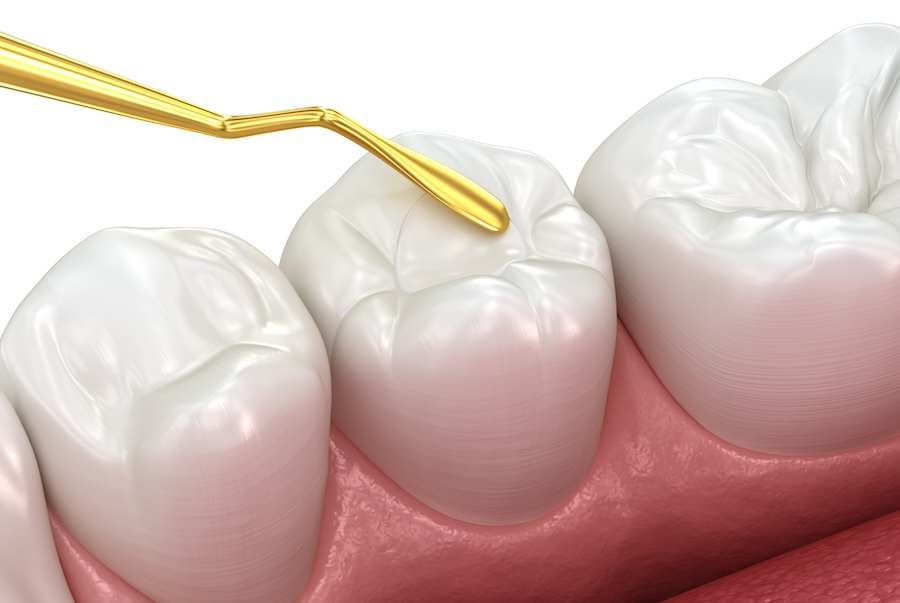
Once the tooth is numb, the filling itself is usually a straightforward procedure. We remove the decay and any tooth structure that has become too weak to support the restoration, then prepare the area so the filling can bond securely. From there, we rebuild the missing part of the tooth with tooth-colored composite material.
Composite is placed in layers, and each layer is hardened with a special light before the next one is added. Working in layers gives us more control over the shape of the restoration and lets us rebuild the tooth gradually. Once the filling is in place, we polish it and refine the contours so it feels natural against the teeth around it.
We also check your bite before you leave. A filling can look great and still feel strange if it sits even slightly too high, especially once the numbness wears off and you start chewing normally again. If that tooth seems to hit before the others afterward, give our office a call so we can adjust it.
Will Getting a Filling Hurt?
For many patients, the numbing injection is the part they think about most before the appointment. You may feel a quick pinch or pressure as the anesthetic goes in, and then the area gradually becomes heavy and numb. During the filling itself, you may still notice vibration, movement, or pressure, but you should not have to push through sharp pain.
If dental treatment tends to make you nervous, let our team know before we get started. We offer nitrous oxide, oral conscious sedation, and IV sedation when appropriate, depending on your needs and the treatment being done. We can also pause during the appointment if you need a break or if the tooth needs more anesthetic.
Some teeth are simply more stubborn to numb than others, especially when there is inflammation nearby. If something feels uncomfortable, we can stop and make an adjustment before continuing. A little feedback during the appointment helps us keep you much more comfortable than trying to power through it.
What Does a Tooth Feel Like After a Filling?
Your mouth may stay numb for a few hours after the appointment, which can make chewing feel awkward at first. Until normal sensation comes back, it is easy to catch your cheek, lip, or tongue without realizing how hard you are biting. Hot drinks can also be harder to judge while part of your mouth still feels numb.
Once the anesthetic wears off, the tooth may feel slightly different for a little while. Mild sensitivity to cold or pressure can happen, especially when the cavity was deeper or we had to work closer to the nerve. In many cases, that sensitivity eases over the next several days as the tooth settles.
We want to see the tooth becoming less sensitive as time goes on. If biting feels sharp, the filling seems to hit before your other teeth, or the sensitivity keeps getting stronger, give us a call. Sometimes the bite needs a small adjustment, while lingering symptoms can mean the nerve inside the tooth needs another look.
What If the Cavity Is Very Deep?
With a deep cavity, removing all of the decay can bring us close to the nerve inside the tooth. We can often see on the X-ray when that may be the case, and we will explain what we are seeing before we begin. Even with that information, we cannot always predict exactly how the nerve will respond after the tooth is restored.
Some teeth settle down well once the decay is gone and the filling is in place. Others remain inflamed and begin causing lingering cold sensitivity, spontaneous aching, or throbbing that keeps returning. If the nerve cannot recover, root canal treatment may be needed to save the tooth.
Finding decay earlier usually gives us more room to work. A smaller cavity leaves more solid tooth around it and often keeps us farther away from the nerve. That can mean a simpler restoration and a much easier recovery afterward.
How Long Do Dental Fillings Last?
Composite fillings can last many years, although the timeline varies from tooth to tooth. A small filling on a lightly used surface may have a very different life than a larger filling that replaces much of a back tooth’s chewing surface. Clenching, grinding, hard foods, oral hygiene, and new decay around the edges can all affect how long a restoration holds up.
During regular exams, we keep an eye on the edges of older fillings and the natural tooth around them. A filling can stay solid for years and then develop a worn edge, a small chip, or a gap where plaque can begin collecting. Finding those changes while they are still limited can keep the next repair from becoming more involved.
Daily brushing with fluoride toothpaste and cleaning between the teeth help protect the area where the filling meets the tooth. Frequent sipping on soda, sweetened coffee, sports drinks, or other sugary and acidic drinks keeps exposing that enamel to acid throughout the day. The filling may still be strong while the tooth around it becomes more vulnerable.
Can You Get Another Cavity Around an Existing Filling?
Yes. The natural tooth surrounding a filling can develop new decay years after the original restoration was placed. We often see that begin along the edge of an older filling or on another surface of the same tooth.
Over time, chewing, grinding, dry mouth, changes in diet, and shifts in home care can all affect how well that area holds up. A restoration that has done its job for years may eventually develop a worn margin where plaque has an easier place to collect. We keep checking those older fillings during routine visits even when they have never given you any trouble.
If new decay develops around a filling, we look at how much healthy tooth is still available before deciding what to do next. Sometimes we can remove the old filling, clean out the new decay, and place another restoration. When a large portion of the tooth has already been replaced, a crown may provide more support for what remains.
Help Prevent the Next Cavity
Brushing and flossing do a lot of the daily work, but the way you eat and drink throughout the day can change how often your teeth are exposed to acid. A sweet coffee that lasts all morning, a sports drink sipped through practice, or frequent snacks between meals can keep restarting that acid cycle. Teeth have less time to recover when sugar and acid are showing up every hour or two.
Fluoride can help strengthen enamel and make it more resistant to decay. Depending on your cavity history, we may recommend changes to your home routine, additional fluoride, or other preventive options. For children and some adults who are especially cavity-prone, sealants can also protect the deeper grooves where plaque tends to settle.
Regular visits give us the chance to compare what we are seeing from one appointment to the next. We can catch a small change before it becomes a larger repair, check the edges of older fillings, and make adjustments if cavities start showing up more often. Over time, that can help you keep more of your natural tooth structure intact.
Schedule Dental Fillings in Eden Prairie, MN
If we have found a cavity, or you have started noticing sensitivity, food catching around one tooth, or a rough spot that was not there before, we would be happy to take a closer look. At Prairie Dental Group, we provide tooth-colored fillings and other restorative care for patients in Eden Prairie and the surrounding area. We will show you what we see, explain what the tooth needs, and help you feel comfortable with the next step.
Call Prairie Dental Group at (952) 444-1907 to schedule your visit with our team. We look forward to helping you keep your teeth healthy and feeling good!
Contact Us