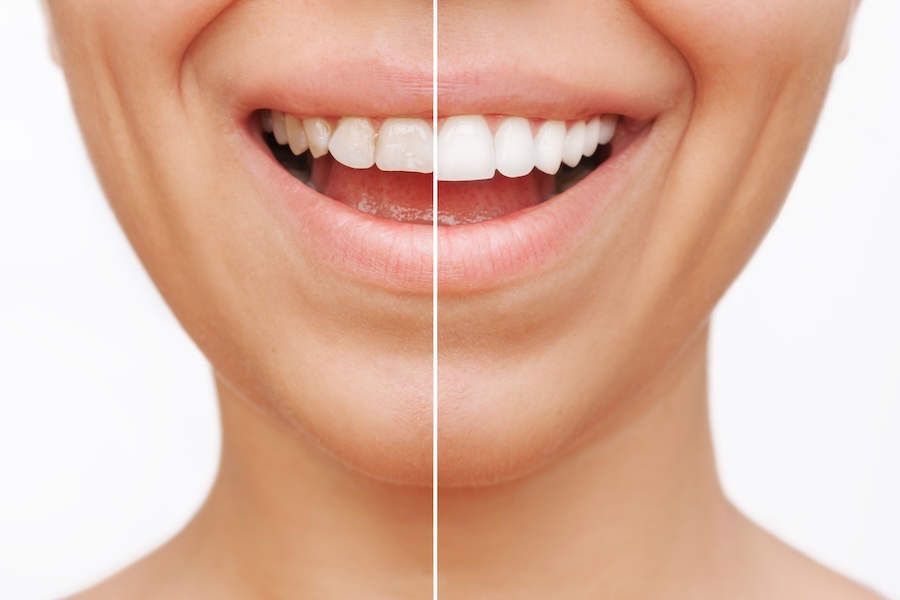
Sometimes the thing bothering you about your smile is pretty specific. Maybe your teeth have gotten darker over the years, one front tooth has a chipped edge, or several teeth look uneven when you smile. Once you start looking at cosmetic options, though, it can be hard to tell whether whitening will be enough or whether veneers would address more of what you are seeing.
At Prairie Dental Group in Eden Prairie, MN, Dr. Benjamin Fenger, Dr. Jeffrey Moos, Dr. Cole Boerema, Dr. Erik Engelbrektson, and Dr. James Watson offer professional teeth whitening and porcelain veneers. We also offer Invisalign when tooth position is part of the concern. Before recommending anything, we look at the color, shape, alignment, existing dental work, and overall health of the teeth.
Whitening and veneers can both improve a smile, but they are meant for different concerns. Whitening changes the shade of natural enamel, while veneers can change color along with shape, length, proportion, and certain small spacing concerns. Because of that, the choice usually comes down to whether color is the main issue or whether several things need attention at once.
Porcelain Veneers vs. Teeth Whitening: Start With the Main Concern
If your teeth are healthy and you mainly want them brighter, whitening may be enough. It can lighten stains from coffee, tea, wine, tobacco, aging, and other everyday sources without changing the structure of the teeth. If you already like the shape and position of your smile, treatment can stay focused on color.
Veneers are more involved because they can change several features at the same time. A veneer can cover a chipped edge, change the width or length of a tooth, improve symmetry, and mask certain types of discoloration. When shape, wear, or proportion is part of the concern, whitening alone may not give you the change you want.
There can also be a middle ground. A small chip may be repaired with bonding, while mild crowding may be better handled with Invisalign. Depending on what you want to change, one of those options may keep treatment more focused.
What Professional Whitening Does Well
Professional whitening works on natural tooth enamel that has darkened or picked up stains over time. The whitening gel penetrates the enamel and breaks up stain molecules, which can make the teeth look brighter overall. It tends to work well for generalized yellowing and many common food or drink stains.
At Prairie Dental Group, we offer both in-office whitening and custom take-home trays. In-office treatment can brighten the teeth in one visit, while take-home trays let you whiten gradually at home. And a bonus, you can also keep the custom trays for future touch-ups.
Whitening works best when color is the main concern. If a tooth is chipped, worn shorter, oddly shaped, or out of position, another treatment may need to handle that part. Also, existing crowns, veneers, and tooth-colored fillings stay the same shade during whitening, so we look at visible dental work before you start.
What Porcelain Veneers Can Change
Porcelain veneers are thin shells placed over the front surface of selected teeth. They can change color, shape, length, and proportion, and they may also help with small gaps, worn edges, chips, or teeth that look uneven beside one another. Each veneer is custom made to look like a natural tooth, including the shade, contour, translucency, and surface detail.
We also look at more than the front view of the smile. The bite, the amount of enamel present, the position of each tooth, and whether you grind or clench can all affect how veneers are planned. From there, we decide how many teeth need treatment and how much preparation each one requires.
Veneers usually involve removing a small amount of enamel so the porcelain can fit naturally. Because that enamel does not grow back, the tooth will continue to need a veneer or another restoration in the future. That is one of the main differences between veneers and whitening.
When Whitening Is Usually the Better Fit
Whitening tends to make sense when the teeth are healthy, the shape already looks good, and the main concern is color. Maybe your smile has gradually darkened, or coffee and tea have left the enamel looking more yellow than you remember. In those cases, whitening can brighten the teeth without changing their structure.
It can also be a good place to start when you are unsure how much cosmetic treatment you want. After whitening, you may decide the brighter shade solved most of what was bothering you. However, if one chipped edge or uneven tooth still catches your eye afterward, that area can be handled separately.
Sensitivity is worth mentioning before whitening begins. Some people notice temporary sensitivity to cold during or after treatment, particularly if they already have sensitive teeth or exposed root surfaces. If that applies to you, we can adjust the whitening method or timing.
When Whitening May Not Give You the Result You Want
Some discoloration sits deeper in the tooth and may not respond as evenly to whitening. Teeth darkened by trauma, certain medications, developmental changes, or previous root canal treatment can remain darker than the surrounding teeth even after whitening. In those cases, the color may improve without becoming fully even.
Visible dental work can also affect the result. A crown or filling that matches your current tooth shade may look darker after the natural teeth are whitened. Since restorations do not respond to whitening gel, we sometimes need to plan for replacement afterward if the color difference becomes obvious.
The order of treatment is a factor when whitening and restorative work are both involved. If you want a brighter overall smile and also need a new crown or veneer, whitening often comes first. This way, the new restoration can be matched to the shade you plan to keep.
Veneers Can Change Shape and Color Together
Sometimes a front tooth is not just darker. It may also be shorter from wear, narrower than the tooth beside it, chipped along the edge, or slightly irregular in shape. When several of those concerns show up together, veneers can address them in one treatment plan.
Porcelain also gives us more control over the final color and how much light passes through the veneer. If one tooth is much darker than the others, we can choose a veneer shade and level of translucency that helps it blend with the neighboring teeth while still masking the darker tooth underneath. Then, we shape the veneer so the contours, surface texture, and edge look natural beside the surrounding teeth.
If the concern is smaller, another option may fit better. A chip may only need bonding, while darker but otherwise healthy teeth may respond well to whitening. We look at how many teeth are involved and what you want to change before deciding how much treatment makes sense.
Small Gaps, Uneven Teeth, and Tooth Position
A small gap between the front teeth can sometimes be closed with veneers by changing the width or shape of the teeth. Veneers can also help when one tooth is naturally smaller, slightly misshapen, or worn shorter than the one beside it. In those cases, the goal is to make the teeth look more even across the smile.
However, if the gap is tied to crowding, rotation, or the way the teeth sit in the bite, Invisalign may make more sense. In that situation, moving the teeth addresses the position itself rather than changing the shape of the teeth to close the space. Afterward, whitening or bonding can still be used if you want to refine the color or shape.
Some patients end up using more than one treatment. Invisalign may come first to improve alignment, followed by whitening once the teeth are in place. Then, if one small shape difference remains, bonding or a veneer can be used for that tooth.
How Much Enamel Do Veneers Require?
Most porcelain veneers require some enamel to be removed from the front surface of the tooth. The amount depends on the current position of the tooth, how much shape change is planned, and how much room is needed for the porcelain. A tooth that already sits forward may need more preparation than one that sits slightly inward.
We evaluate each tooth individually before treatment begins. Some teeth may need very little preparation, while others need more room for the porcelain to sit correctly. If a less invasive option can reach the same goal, we can compare that before making any permanent changes.
If preserving as much enamel as possible is high on your list, tell us early. That can influence whether whitening, bonding, Invisalign, or veneers make the most sense for the result you want. It also gives us a clearer idea of how conservative you want the plan to be.
Whitening Leaves the Tooth Structure Alone
Whitening changes color without removing enamel or covering the tooth. If you already like the shape and alignment of your teeth, that lets you improve the shade without committing to a restoration. There is also no veneer or crown that will eventually need replacement.
The tradeoff is that whitening is not permanent. Teeth continue to age and pick up stains from food, drinks, and tobacco, so the shade can gradually darken again. Still, many patients maintain the result with occasional touch-ups.
That maintenance is usually easy to plan around, particularly if you have custom trays. However, whitening only works on natural enamel, so visible crowns, veneers, or fillings need to be considered beforehand. If you have several restorations in the front of the mouth, we may need to think through the final shade before you begin.
How Quickly Can You See a Change?
If timing is important, whitening is usually faster. In-office whitening can brighten the teeth during a single visit, while take-home trays work over a longer period. That can make whitening easier to fit around a wedding, reunion, vacation, or photo session.
Veneers take more time because the teeth need to be evaluated, prepared, and restored with custom porcelain. Impressions or digital scans are taken, and the final veneers are made before they are bonded in place. The process usually takes more than one appointment.
The timeline also depends on whether other dental work needs to happen first. If a tooth needs a filling, gum treatment, or another restoration, we take care of that before the cosmetic work moves ahead. Then, we can continue with whitening or veneers once the teeth are ready.
How Long Do Whitening and Veneers Last?
Whitening can last quite a while, but the shade will gradually change again. Coffee, tea, wine, tobacco, and deeply colored foods can speed that up. Because of that, good brushing habits and periodic touch-ups can help maintain the result.
Porcelain veneers resist staining better than natural enamel, but they still need regular care. The teeth underneath remain vulnerable to decay, and the gumline around the veneers needs to stay healthy. So, brushing, flossing, and routine dental visits continue to matter after treatment.
Veneers may last many years, but they are not lifetime restorations. They can chip, loosen, or eventually need replacement. Grinding and clenching can also put extra stress on them.
How Grinding Affects Veneers
Grinding can affect both natural teeth and porcelain restorations. Repeated pressure can flatten tooth edges, chip enamel, and damage veneers over time. In some patients, years of grinding are part of the reason the front teeth look shorter or more worn in the first place.
If we see signs of grinding, we take that into account before placing veneers. A nightguard may be recommended, and the bite may need a closer look before treatment begins. Then, we can plan the veneers with those forces in mind.
What About Tooth Sensitivity?
Whitening can cause temporary sensitivity, particularly in people whose teeth already react to cold. Gum recession, exposed root surfaces, enamel wear, or a history of sensitive teeth can make that reaction stronger. If needed, we can adjust the concentration, frequency, or schedule.
Veneers can also cause some sensitivity after the teeth are prepared. Because a thin layer of enamel is removed, the teeth may react to temperature for a while after treatment. Still, the amount and duration vary from person to person.
If you already have persistent sensitivity, we want to know why before cosmetic treatment begins. A cracked tooth, cavity, gum recession, or older filling may be contributing. Once we know the cause, we can plan treatment around it.
Can You Whiten First and Decide on Veneers Later?
Yes. If you are unsure how much treatment you want, whitening can be a good first step. It changes the color without committing you to a restoration, and sometimes that is enough.
After whitening, you may still notice a chip, small gap, or uneven edge. At that point, bonding, veneers, or Invisalign may be considered depending on what remains. Starting with color can sometimes make it easier to see whether anything else needs attention.
However, if veneers are already planned, whitening may need to happen first. Porcelain does not lighten after it is bonded, so we usually want the natural teeth at the shade you prefer before selecting the final veneer color. Then, the porcelain can be matched to that brighter shade.
Existing Veneers and Crowns Affect Whitening
If you already have porcelain veneers or crowns, whitening gel will not change their color. The natural teeth may get lighter while the restorations stay exactly the same. That can create a mismatch, particularly when the dental work is near the front of the smile.
Sometimes whitening brings the natural teeth closer to the shade of an older restoration. Other times, the restoration may need replacement if it no longer blends well. We look at the age, condition, and position of the existing dental work before deciding how to plan the color.
If you are considering both whitening and new cosmetic restorations, we recommend whitening first to the desired shade. Then, new crowns or veneers can be made to fit that shade.
Cost and Long-Term Care
Porcelain veneers cost more than whitening because each veneer is individually designed, fabricated, and bonded to a tooth. The total depends on how many teeth are being treated and how much preparation is needed. Over time, those veneers may also need repair or replacement.
Professional whitening costs less and takes less treatment time, although the shade will need occasional refreshing. If you have custom trays, those touch-ups can often be done at home. That usually means less long-term maintenance when color is the main concern.
Dental Health Comes First
Before whitening or veneers, we check for cavities, cracks, gum disease, and problems with existing restorations. If something needs treatment, we handle that first. Then, the cosmetic work can be planned around healthy teeth and gums.
Older fillings and crowns can also affect the final result, particularly on the front teeth. If a restoration is visible when you smile, we look at its color and condition along with the surrounding enamel. Sometimes treatment needs to happen in a certain order so the shades work together.
For example, an older front crown may look fine now but stand out after the neighboring teeth are whitened. In that case, we may whiten first and replace the crown afterward. Then, the new crown can be matched to the final shade.
How We Compare the Options
We usually look at four things: color, shape, position, and tooth structure. If color is the only concern, whitening is often the most conservative option. If shape, wear, or proportion also need attention, bonding or veneers may fit better.
If the teeth are crowded or spaced because of position, Invisalign may be a better starting point. And if only one tooth is chipped or uneven, treating that one tooth may be enough. The plan can stay as focused as the concern itself.
Your preferences also play a role. Some patients want to avoid altering enamel whenever possible, while others are comfortable with veneers because they want a broader change in shape and color. Once we know what you want and what the teeth can support, we can compare the options more clearly.
Cosmetic Dentistry at Prairie Dental Group in Eden Prairie, MN
If you are comparing porcelain veneers and teeth whitening, think about what you want changed and how much treatment you are comfortable with. Whitening works well when color is the main concern, while veneers can also address shape, worn edges, small gaps, and uneven proportions. If alignment is part of the issue, Invisalign or bonding may give you another route.
At Prairie Dental Group in Eden Prairie, MN, Dr. Benjamin Fenger, Dr. Jeffrey Moos, Dr. Cole Boerema, Dr. Erik Engelbrektson, and Dr. James Watson can evaluate your teeth and compare the options based on what you want to improve. If you are considering professional whitening, porcelain veneers, or another cosmetic treatment, call Prairie Dental Group to schedule a consultation!
Contact Us